Education staff against dismantling special education
Teachers and educational support staff are seriously concerned about the government's plan to phase out special education starting in 2035 and place students together in the same class as much as possible. They call inclusive education a beautiful ideal, but unfeasible and risky. They fear negative consequences for students, teachers, and the quality of education.
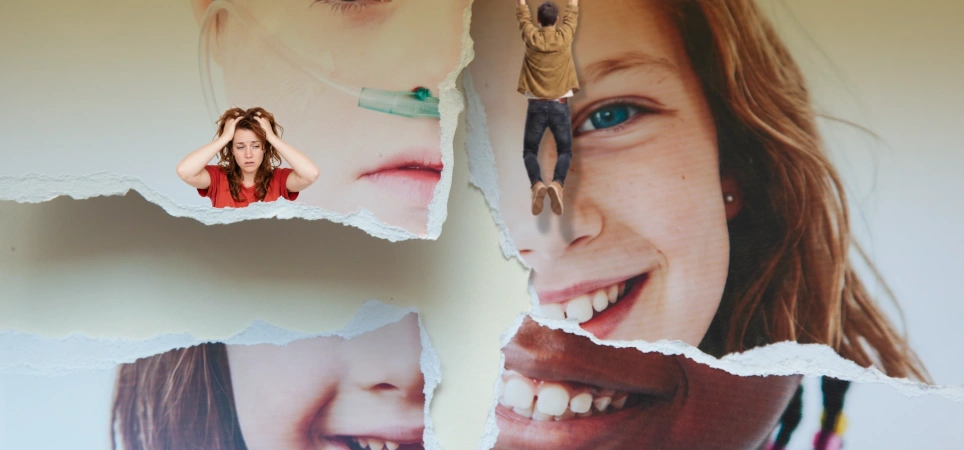
Picture: Type tank
This is evident from large-scale research by the AOb, CNV and FvOv, in which more than 9.100 employees – mostly teachers – from primary, secondary, and special (basic) education participated. The unions will present the report 'Help(t) Inclusief onderwijs?' to the House of Representatives tomorrow, in which they ask for the current bottlenecks to be resolved first.
Less than 20 percent of teachers are positive about the implementation of inclusive education.
Inclusive education goes beyond appropriate education. The premise is that, from 2035 onwards, all schools will provide an inclusive learning environment for children with and without support needs. The research findings show that there is no support within any education sector for a fully inclusive education system in which special education largely disappears. More than half are opposed to its implementation. The difference between those in the classroom and those outside is striking: less than 20 percent of teachers are positive. According to most respondents, essential conditions for making inclusive education a success are lacking. Small classes, sufficient staff, appropriate support, and suitable school buildings are, for example, necessary according to them.
The train thunders on toward inclusive education, while the workplace is not being heard.
AObChair Coba van der Veer calls it concerning that the plans are proceeding while, in practice, providing appropriate education is already complicated. “The train is thundering on toward inclusive education, while those on the ground are not being heard,” Van der Veer cites as the reason for the research. “The preconditions must be in order first, otherwise inclusion will be counterproductive for all students.”
The research shows that virtually no one expects fully inclusive education to actually be realized by 2035. More than half of the respondents do believe that schools will become more inclusive, but that special education will continue to play an important role. In fact, many participants believe that special education should actually expand so that waiting lists decrease and students receive better support. 'I really hope that more students go to special education so that we can teach normally again. Right now, I sometimes have classes with 5 to 8 students with special needs. It's impossible!', writes a teacher.
Concerns about the quality
A major point of concern is the impact on the quality of education. Teachers fear that they will not be able to do justice to any student in more complex classes. They expect more unrest in the classroom and a decline in students' social skills and cognitive performance. One teacher explains: 'Students who require extra attention influence the learning climate in the classroom. They stop, it becomes chaotic, and less time is spent on learning. This comes at the expense of, among other things, the academic performance/basic skills of regular students. A (very) worrying matter.'
The workload will also increase further. Not only due to extra student support, but also due to increased administration, consultations with care providers, and contact with parents. Secondary school teachers, in particular, indicate that they never chose a profession involving many care duties. 'This is truly a completely insane idea. If this goes ahead, I don't want to be a teacher anymore. I am good at teaching, but I am not a care provider; I cannot and do not want to be that,' writes a teacher.
There are also major concerns regarding the well-being of pupils. The exclamation 'What are we doing to children!' appears regularly in the survey. Staff from special (primary) education, in particular, believe that more pupils will drop out if they are forced to transfer to mainstream education. Or, as a special primary education teacher puts it: 'The average special education child simply does not fit in a regular school. They can only function in a very small group in an environment with few stimuli and a lot of structure. Should these children be forced to attend a regular school, many children will be overwhelmed and thus harmed. And consequently, many children will end up staying at home.'
Insufficiently equipped
Another significant bottleneck is teacher preparation. Less than 40 percent of all teachers say they are sufficiently equipped to effectively implement appropriate education. This applies particularly to teachers in special primary education (SBO), special secondary education (SO), and practical education. Teachers acquire their knowledge mainly through practical experience, rather than through teacher training. For inclusive education, these percentages are even lower. Less than one in five teachers in primary and secondary education says they are well prepared to provide inclusive education.
Less than 40 percent of all teachers say they are adequately equipped for appropriate education.
According to most teachers, there is a lack of time, budget, training opportunities, and substitute options to further professionalize themselves. School leaders also acknowledge that these preconditions are often not in order. 'Teachers must be able to differentiate to the maximum extent, regarding both the cognitive and mental offerings for students. That is a utopia. Especially in times of staff shortages and the outflow of highly experienced teachers,' writes a school leader.
Nearly two-thirds of respondents want more support and care at school, and more than half would also like to see this directly in the classroom. The deployment of educational support staff is considered particularly important. In addition, many respondents cite the presence of behavioral specialists, remedial educationalists, and itinerant support staff as necessary conditions for better education. Many teachers believe that extra support at school contributes to a lower workload and that students receive help more quickly. At the same time, teachers point out that having more people in a classroom also brings new challenges. According to them, small classrooms, unclear responsibilities, and extra stimuli can actually lead to more unrest.
School buildings often unsuitable
Then there is another practical objection. Particularly in primary education, many school buildings appear not yet to be suitable for more inclusive education. Less than half of the schools have wide entrances, adapted toilets, or lifts. In addition, many schools lack spaces where students can work in peace or receive extra support. Quiet and low-stimulus spaces are scarce, as are spaces for teaching in small groups. A teacher from special education says: 'Primary schools are not ready for inclusive education. They are already struggling to manage the classes. The schools are often not suitable for my students; the playgrounds and spaces are often too small and not adapted (vandal-proof, quiet areas, sensory rooms, etc.).'
Many schools lack wide entrances, accessible toilets, or lifts.
The survey also asked which form of inclusive education would be ideal. One-third of the participants prefer a single school building where students with special educational needs receive instruction in their own classes. This way, students can still meet each other during breaks and joint activities. A quarter of the participants favor improving support in mainstream schools, while retaining separate schools for special education.
What is also particularly evident from the open-ended answers in the survey is that more inclusive education requires a different structure for education. A selection of the responses: 'The entire system needs an overhaul!' 'There will have to be much more cross-group collaboration.' In addition, respondents emphasize that implementing a different system costs a great deal of time, energy, and money: 'Focusing on inclusive education without investment is nothing more than yet another disguised austerity measure.'
Road map
The discussion about inclusive education has been ongoing for some time. AOb and other unions withdrew from the consultations in 2022 with the ministry when it became apparent time and again that there was no regard for the bottlenecks in daily practice. Then-Minister Dennis Wiersma subsequently sped up with his 'roadmap' to inclusive education. In 2024, a followed policy framework with concrete steps. According to the government, inclusive education fits within the development towards an inclusive society and offers opportunities to solve problems such as waiting lists for special education. From the policy framework: 'By offering inclusive education to as many children as possible close to home (..), ultimately far fewer children will be dependent on specialized education further away from home. In addition, inclusive education with the right support offers teachers the chance to focus more on their core task again.'
In this study, education staff call for more realism: first get the preconditions in order, such as small classes, sufficient teachers and support, and less workload. AOb-Chair Coba van der Veer hopes that politicians will come to their senses. "Inclusive education is sold as progress, but a system in which everyone has to fit in can mean that ultimately no one gets what they need. With harmful consequences for the entire class, including the teacher."
Curious about the research 'Help(t) inclusive education?' Download the report


